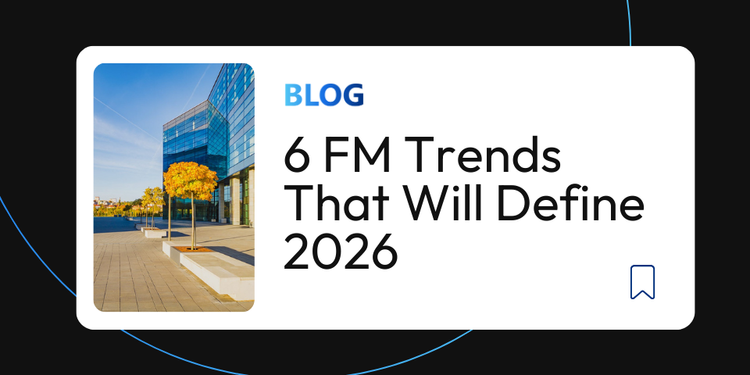
6 FM Trends for 2026
What facility leaders need to prepare for as technology evolves, budgets tighten, risks grow, and expectations rise in 2026.
The landscape of facility management is shifting fast, and 2026 will bring a new set of pressures and opportunities that leaders cannot ignore. From AI that predicts failures before they happen to the growing demand for resilience and stronger facility performance standards, the year ahead will push FM teams to rethink how they plan, operate, and invest. These trends are already reshaping day-to-day work across organizations, and the most successful teams will be those that move early, adopt smarter tools, and build stronger strategies for long-term performance.
1. AI-Driven Facility Operations and Predictive Maintenance
AI supplemented work will move from “nice to explore” to “must-have.”
Facilities will increasingly use AI to predict failures, automate scheduling, optimize energy use, and surface insights from CMMS/BAS data. The focus shifts from reactive work orders to forecasted, risk-based decision-making.
2. Lifecycle-Based Capital Planning (Goodbye, Duct Tape Fixes)
More organizations will shift from short-term repairs to long-range, risk-based capital planning supported by accurate asset data.
Lifecycle modeling, cost forecasting, and portfolio prioritization tools will see widespread adoption as budgets tighten and boards demand defensible plans.
3. Resilience as a Core FM Mandate
Climate events, cyber threats, supply chain limitations, and aging infrastructure are pushing resilience to the forefront.
FM teams will take on greater responsibility for business continuity, physical security, emergency preparedness, and continuity of operations (COOP).
4. The Skilled-Trades Crunch Gets More Serious
The labor shortage continues and becomes even more acute in 2026.
Facilities management organizations will need to train and promote from within, hire more apprentices, outsource strategically, and think long term about investment in workforce development.
5. Energy Optimization and Compliance Pressures
Energy reporting requirements, carbon reduction expectations, and sustainability goals accelerate.
Facilities will respond with building performance standards (BPS) compliance planning, energy modeling, electrification evaluations, and deeper audits.
6. Data-Driven Decision Making Across the FM Portfolio
Facilities teams will increasingly rely on integrated data – from space utilization, maintenance history, energy performance, and occupancy patterns – to make strategic decisions. The focus shifts from isolated metrics to actionable insights that optimize operations, capital planning, and occupant experience across the entire portfolio.
As 2026 approaches, the facilities that thrive will be those that embrace change, adopt data-driven practices, and build long-range strategies that strengthen operations and reduce risk. Each of these trends offers a chance to improve performance, modernize workflows, and deliver greater value to the organization.
Now is the time to look closely at your portfolio, identify the areas with the greatest opportunity, and take practical steps that move your facilities forward. FEA is here to help if you are ready to turn these trends into action. Contact us at info@feapc.com to schedule a quick call.